5 years into the war in Iraq, there is no end in sight. 200 US soldiers meet outside of Washington DC, sharing first-hand accounts of the war on-the-ground and of growing GL resistance.
Untitledanti-belicista
11 Archival description results for anti-belicista
Project in Residency Falconetti Peña
/ Exhibition War, insubmission, art /
/ FILMOTECA DE CATALUNYA /
/ CRIPPLES OF WAR AND NORMALITY /
/ PATRIOTISM AND COLONIZATION /
/ YOU WILL DIE AS HEROES /
/ PAMPHLET AND REVOLUTION /
WAR, INSUBMISSION, ART
Project in Residency Falconetti Peña
In 1924, coinciding with the tenth anniversary of the end of World War I, Otto Dix published his work The War, composed of fifty engravings in which he denounced warmongering with a harshness that had not been seen until then. A century earlier, Goya, a painter who inspired Otto Dix, produced The Disasters of War. And now, one hundred years later, a cruel and senseless war is once again being fought in Europe.
Otto Dix is located between two times, Goya's and ours. The project for this exhibition/intervention is to take his engravings as a starting point for a journey through the art that has rebelled against war slogans.
Goya, Dix, Grosz, Arntz, Watkins and many other artists defied the prevailing aesthetic order by creating works of enormous relevance. To do so, they used modest formats, the engraving, the poster, the mimeographed magazine, the pamphlet, the false documentary, the only ones they could access in times of censorship and blockade. These are works that managed to last against all odds, as there were many who were interested in making them disappear.
Thanks to them, today we can follow the trail of those who in their day disobeyed the patriotic slogans, maintaining the flame of resistance to the war madness.
The project will cover various spaces and historical periods, combining different formats, pictorial, graphic and audiovisual.
The idea is to contrast them, face to face, with the messages of those who at the time bet on galvanizing the warrior ardor of the masses.

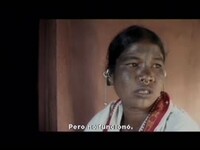
In 2003 the reality of war set in, amd the roar of the mainstream media seemed to deafen ours ears and stifle our voices. Hudson Mohawk Independent Media center respond by coming together to make these three documentaries. Independent Media in a time of war, Voices Against War, Women's fast for peace.
UntitledThe post-war period and the New World Order told through documentaries, war films, propaganda and photographs. Waco, Oklahoma City, September 11, the war on terrorism and Special Laws, the "Other America" and the destruction of the 10 amendments. The Pentagon is born from the need to bring together counter-information and journalistic rigor, continuing the operation that began with the radio spots "Iraq 2 Special Edition", "death for sale" and "The Black Mirror of Democracy".
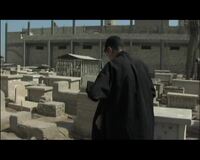
Untitled" A commentary on the silent side that surrounds the act of war, the film illustrates my sensibility as a human being to the small details, which pass, unnoticed in a war..."
UntitledA story of the war in Iraq from a perspective rarely seen. The primary point of view is Iraqi - a family grieving the tragic death of its eldest son. After years of hard work, Ra'ad, an Iraqi portrait photographer, has saved enough money to open his own shop. On the night of the opening, while volunteering to guard the ancient mosque in Kadhimiya, Ra'ad is shot and killed by an American patrol.
UntitledFrom conflicts and uprisings in Cincinnati, racism and misery, to the events that have shaken the start of this new century. Until there is justice there will not be peace. NO JUSTICE, NO PEACE offers a window into the world of today's politically active youth. This compelling video presents portraits of four Ohio college students who are active in a variety of issues including the fight for equal education, affirmative action, affordable housing, civil liberties, and women's rights; an end to racial profiling and police brutality; and the Israeli-Palestine conflict. While all four share a passion for justice and equality, their perspectives, strategies and tactics differ - offering the audience a look at the complexity of youth activism in the new millennium.
This short film, taken from the feature La Folle de Toujane, brings to the foreground a political event almost separate from its main storyline. René Vautier plays a “committed” director-producer who has just witnessed the brutal beating of an “Arab” by the police in the street, right in front of the café where he's having lunch. The scene deeply shocks him; he doesn't react in the moment, but promises himself he will one day make a film about what he saw. This scene, which refers to the massacre of Algerians in Paris (October 17, 1961), powerfully symbolizes the importation of the criminal mindset that fueled the French army’s intervention in Algeria. It reminds us of the reality of extreme violence, still present in collective memory and yet never acknowledged by a France that continues to deny its responsibility. A denunciation of the self-censorship of French filmmakers in the 1960s and ’70s when facing the reality of state racism.
The Law of Silence, a graduation documentary from La Fémis by Moïra Chappedelaine-Vautier, Nadia Zibat, and Raoul Seigneur, explores the 1963 Amnesty Law and its consequences on research conducted about the Algerian War. It features interviews conducted in 2002 with Henri Alleg, director of the Alger Républicain newspaper from 1951 to 1955, and Pierre Vidal-Naquet, historian and essayist. The film also includes striking statements from General Massu and lawyers who dismantle the legal defenses of figures like Jean-Marie Le Pen. Moïra not only gives voice to her father, René Vautier, but also reuses footage he shot forty years earlier. A very compelling documentary that reminds us, among other things, that amnesty is not forgiveness, but the erasure of both the sentence and the crime itself.
Filmed by Bruno Muel, La Caravelle captures the testimony of a French governess teaching at an orphanage in Tunisia, who recounts the traumatic memories of one of her young Algerian students.