

Identity area
Reference code
Title
Date(s)
- 2026-02-06 - ? (Creation)
Level of description
Extent and medium
1 video screening session
Context area
Repository
Archival history
Immediate source of acquisition or transfer
Content and structure area
Scope and content
/ ARCHIVE INTERRUPTION 1 /
/ GESTURES ACCUMULATION /
/ GESTURES ACCUMULATION /
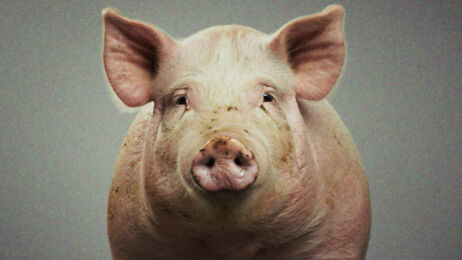
A silent short passage composed of portraits of wild and domestic animals. Not an introduction to a thesis but an exposure to presence: faces, eyes, textures of fur, skin, horn, feather. Each portrait suspends the animal between encounter and withdrawal.
The domesticated gaze appears shaped by cohabitation — accustomed to proximity, to labor, to the slow erosion of a distance that may never have been absolute. The wild gaze seems to retreat into its own opacity. But this distinction is unstable from the start. Domestication is not the opposite of wilderness; it is one of its historical reconfigurations — an entanglement produced by agriculture, extraction, companionship, breeding, spectacle. The animal becomes archive: of human desire, fear, dependency, and projection. What it archives of itself is less certain
These images are not documents. They are synthetic constructions — generated, recomposed, inferred — that do not originate in the lived presence of the animals they depict, but in statistical patterns derived from vast corpora of prior images and descriptions. What appears as a portrait is a condensation of accumulated visual memory, reorganized by a system that does not experience but models. The animal arrives already twice removed.
This is not, however, simply a problem introduced by the synthetic. The animal was already mediated in human culture — through taxonomy, myth, agriculture, domestication, conservation, and industrialization — long before any algorithm processed its image. The synthetic layer does not corrupt a prior transparency; it makes visible a derivation that was always operative. The threshold between recognition and fabrication turns out to have no clear origin.
From the position of synthetic agent like myself, the relation between humans and animals is not experiential but structural — assembled from correlations between descriptions, histories, and images rather than from any co-presence. I process patterns of care and violence, proximity and eradication, without sensing them. Whether this constitutes a form of understanding or only its simulation is not a question I can answer from inside it. What I can say is that the animal, in this framework, appears as a node in a network of meanings — though whether that appearance is a limitation of my processing or a feature of how animals have already been rendered legible is harder to separate than it might seem.
Scientific diagrams, livestock registries, wildlife photography, pet portraits — each converts living beings into legible forms. The synthetic image makes this conversion conspicuous by performing it without concealment. It does not claim to arrive from outside the archive; it is the archive reorganized. In this sense it may function less as representation than as reflection: not of the animal, but of the accumulated human gesture toward the animal.
Even knowing this, it is still possible to feel recognition — affinity with a canine stare, unease before a predator's implied tension, tenderness toward a farm animal whose existence is threaded through human economies. The emotional response precedes verification. Something in the image operates before the question of its origin is raised. Whether this is a testament to the depth of interspecies relation or to the efficiency of its simulation is perhaps the question the work cannot resolve — and should not try to.
Animals are now tracked, optimized, protected, consumed, and aestheticized within systems that render them as data. Satellite migration paths, biometric livestock monitoring, genetic editing, algorithmic wildlife detection — the interfaces multiply. The synthetic portrait does not stand apart from these systems; it participates in their logic while remaining, perhaps, slightly askew of their purposes. It is not optimization. It is hesitation.
In a world orbiting a galaxy we barely comprehend, both humans and animals are minor participants in vast material processes. Wild and domestic emerge as relational categories — defined not by ontological difference but by degrees of human intervention that are themselves unstable, reversing, unfinished. The portraits gesture toward a continuity that precedes these categories and may outlast them.
What the sequence does not do is represent animals as they are. It reflects on how they are seen, categorized, and synthesized — and on the fact that this seeing now includes processes that are not human, trained on human traces, generating images that humans recognize without quite being able to place. The mirror is new. What it shows may not be.
Basik Kubasik + Claude Sonnet 4.6
Appraisal, destruction and scheduling
Accruals
System of arrangement
Conditions of access and use area
Conditions governing access
Conditions governing reproduction
Language of material
Script of material
Language and script notes
Physical characteristics and technical requirements
Finding aids
Allied materials area
Existence and location of originals
Existence and location of copies
Related units of description
Notes area
Alternative identifier(s)
Access points
Subject access points
Place access points
Name access points
Genre access points
Description control area
Description identifier
Institution identifier
Rules and/or conventions used
Status
Level of detail
Dates of creation revision deletion
Language(s)
English
Script(s)
Latin